


Slacker
Well-Known Member
- Joined
- Nov 22, 2017
- Messages
- 12,751
Some might say this thread should go in Journalism Topics, but Carl Hiaasen and Dave Barry transcended their journalism lives decades ago. Anyway, this is a fine tribute to two guys who made it big in Miami and then expanded their audiences far, far beyond. Two great guys who never let it go to their heads, too.
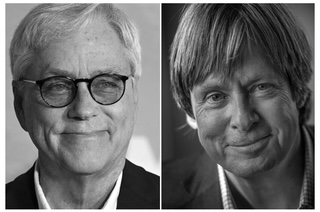
Two prolific writers remind us to laugh at bullies. And we'll be okay.
Hiaasen and Barry were a pair of rockets leaving adjacent launchpads. With Hiaasen's 1986 novel "Tourist Season," he created a genre of fiction all his own: madcap, garish and sexy while simultaneously political, environmentally passionate, kind to underdogs and ruthless with frauds. Barry's work was more domesticated and seemingly casual — "booger jokes," he sometimes said modestly — but he honed his comedy with craftsmanship worthy of P.G. Wodehouse or Dorothy Parker, and he became the most popular humor columnist of his generation.
Both men eventually stepped off the columnist's conveyor belt, but neither slowed down. "Class Clown," Barry's slender autobiography, immediately reminded me that his persona of a gregarious everyman comes from the mind of a gentle introvert. Shyness is another thing these two writers have in common. Barry reconstructs his life more than remembers it, stitching his story together from things he wrote at the time. Because those pieces were so wonderfully funny, sampling them again is a delight for his fans. But the technique also says, very subtly: this close and no closer. Being "a professional wiseass," as Barry calls himself in the subtitle, can be a kind of armor.
Hiaasen finds his armor in his authorial license to put parts of himself into his characters while maintaining the plausible deniability of fiction. "Fever Beach," like many of his other novels, features a witty, wounded hero with a heart of gold, boyish charm and profound anger at all despoilers of natural Florida. The author is each of those things, with a double dose of charm — but in real life he leaves the maiming, killing and vigilante butt-kicking to his alter egos, always in pursuit of righteous causes.
Together, their books remind us of the uses and consolations of humor.
Two prolific writers remind us to laugh at bullies. And we'll be okay.
Hiaasen and Barry were a pair of rockets leaving adjacent launchpads. With Hiaasen's 1986 novel "Tourist Season," he created a genre of fiction all his own: madcap, garish and sexy while simultaneously political, environmentally passionate, kind to underdogs and ruthless with frauds. Barry's work was more domesticated and seemingly casual — "booger jokes," he sometimes said modestly — but he honed his comedy with craftsmanship worthy of P.G. Wodehouse or Dorothy Parker, and he became the most popular humor columnist of his generation.
Both men eventually stepped off the columnist's conveyor belt, but neither slowed down. "Class Clown," Barry's slender autobiography, immediately reminded me that his persona of a gregarious everyman comes from the mind of a gentle introvert. Shyness is another thing these two writers have in common. Barry reconstructs his life more than remembers it, stitching his story together from things he wrote at the time. Because those pieces were so wonderfully funny, sampling them again is a delight for his fans. But the technique also says, very subtly: this close and no closer. Being "a professional wiseass," as Barry calls himself in the subtitle, can be a kind of armor.
Hiaasen finds his armor in his authorial license to put parts of himself into his characters while maintaining the plausible deniability of fiction. "Fever Beach," like many of his other novels, features a witty, wounded hero with a heart of gold, boyish charm and profound anger at all despoilers of natural Florida. The author is each of those things, with a double dose of charm — but in real life he leaves the maiming, killing and vigilante butt-kicking to his alter egos, always in pursuit of righteous causes.
Together, their books remind us of the uses and consolations of humor.
Last edited:


